Future of Mezcal. Theres One As Long As Families Make it
There's a future because there are ways to take care of our environment, there's a future because our next generations, more than drinking, will be able to know what a good mezcal tastes like, there is a future because in the environment where we live every day quantity is more palpable than quality, but there is also a future because there are families that continue to produce quality mezcal and not quantity.
Unfortunately, the market ended up adapting mezcal, where the logic is that the more we make, the more we sell. However, this logic today has a repercussion in the families, in our environment, in our biological environment, in the way we see life.
Oaxacan biodiversity
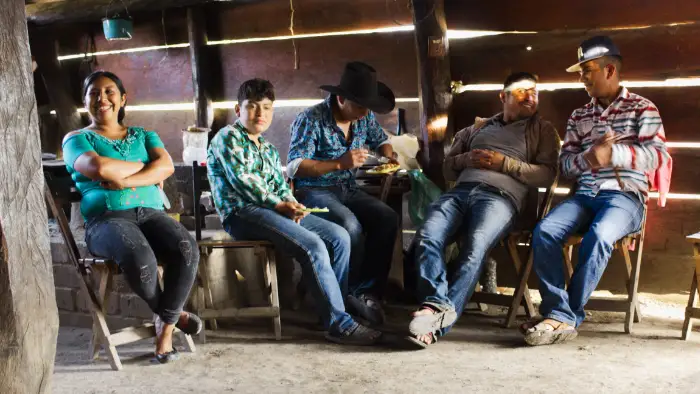
Oaxaca's biological diversity is extensive, vast and unique, not only in Mexico, but in the entire continent and even in the world. The fact that an infinite number of other cultures come to learn about our gastronomy, our beverages and our traditions is the result of the self-management that takes place in various communities in Oaxaca. That is why we know that there are 15 mother tongues, that from those languages one can greet in different ways in different expressions with different sounds, that cultural richness is a legacy that we owe to the communities that have been in resistance, not only now, but from centuries ago, even millennia ago when the Mexica were the only ones who controlled the territory of Mesoamerica.
Nowadays, the families continue to struggle and try to prevail and survive with this drink that has given them identity or rather that has given us identity and that is due to the mezcal families throughout Mexico, although I am going to focus on the mezcal regions of Oaxaca, there are many peculiarities shared by other mezcal regions of this country.
Mezcal Take-Off
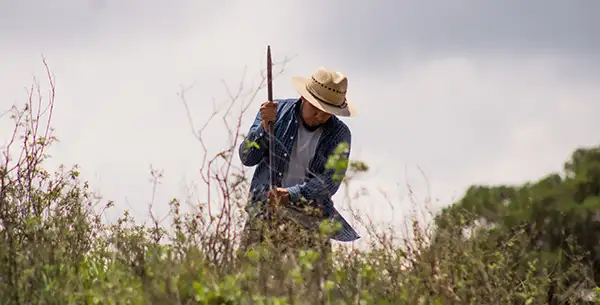
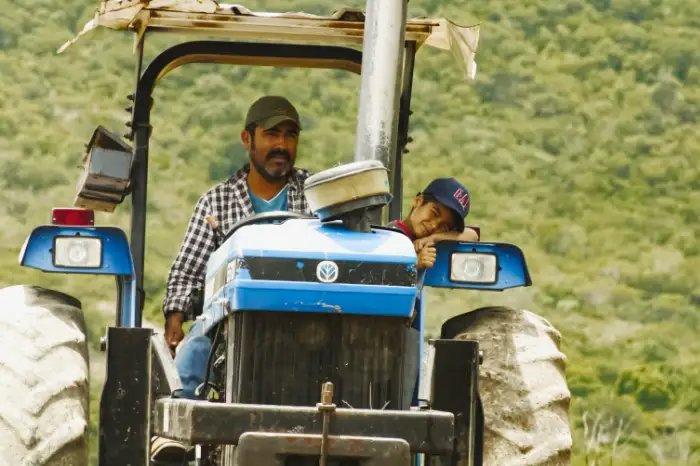
Fifteen years after the take-off of this drink that has succumbed, that has fallen in love and in other cases fallen out of love with many people in the world. Today the panorama is very different, today there are more families dedicated to making mezcal, but there are also more Mezcales without families. Families in the Mezcal towns are the basis of our society, this is deeply rooted in the social context of Mexico, where we still respect the great people, we know the accumulation of wisdom and experience that they have, so we take off our caps, hats, bow our heads, not as a form of veneration, but as a form of reverence, who has given their life for the land, for their people and for their family.
They're our grandmothers and grandfathers who have taken us by the hand to teach us many worlds, to explain to us the uncertain worlds, to affirm the unknown ones for them and to embrace us. They who have formed our mother and father come from a generation where work in the fields, for the most part, has passed, not as a misfortune, but as an adventure. From the good that the land is and the good that it gives us today we eat, thanks to her, thanks to them, thanks to their hands, this is the reflection of daily life in mezcal communities in Oaxaca and Mexico.
As my friend Gonzalo Martínez Sernas says: “Mezcal is a drink of the people, it went out to the world and the world has liked it”, this has implied that due to the high demand some producers and companies have taken the decision to devastate the mountains, the springs and the labor force, and other producers simply contemplate their environment, fertilize it with the the flora, and this has a consequence in the farmer's logic of inviting new fauna, new microorganisms and will continue to make mezcal that has a sentimental value, a communal value and a social value.
The Family Aspect
Not so far from the city of Oaxaca, in the community of Logoche, at six o'clock in the morning, the sound of a firework can be heard in the middle of the week. That common sound in patron saint festivities today, does not call the people to the patron saint celebration.
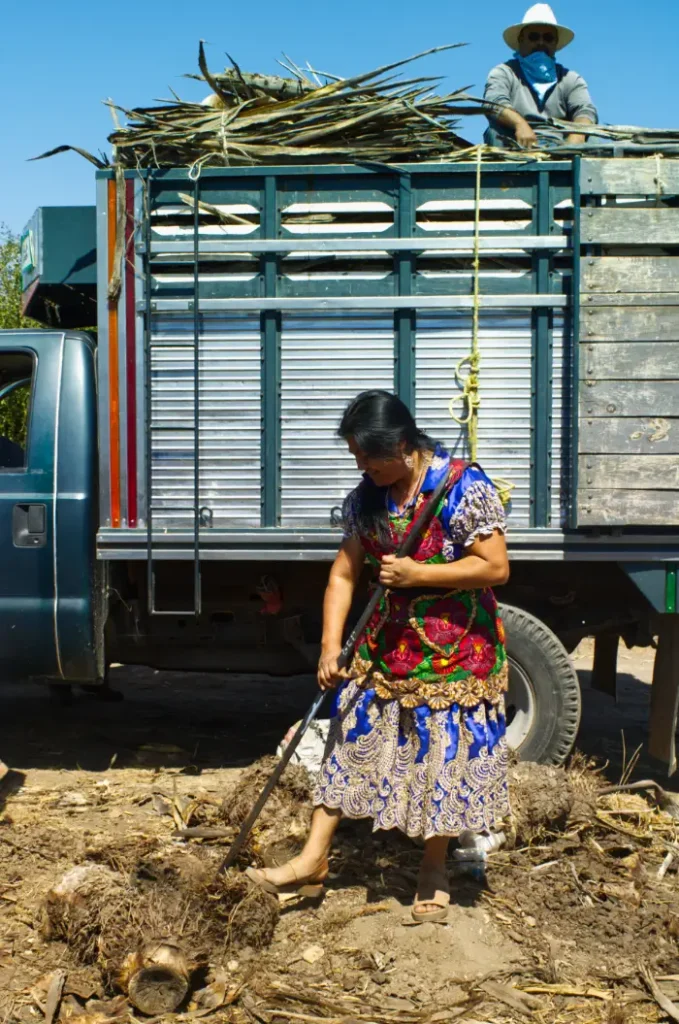
That sound is calling whoever wants to participate in the maguey covering that the Vásquez Aquino family will have, the rocket that has just gone off is a signal for the people who live in this community; they know it's time to support, to carry, to take the machete, they know it's time to go to grab breakfast and they also know it is time to drink a good mezcal. At the same time that the rumble breaks in the sky the Vásquez Aquino family who are going to cover the maguey in their oven, and they are anxiously awaiting the men and women. They know that the work they do as members of a single family of four can be done in three or even five hours. However, with the help of the neighbors they can do it in an hour and a half or two, they know that this time is valuable for everyone, and that is why they call them, and invite them.
This is how little by little the companions arrive, carrying their belts, shovels, machetes, sharpeners or simply their hands, they approach the house of the Vásquez Aquino family to split the maguey, they arrange it, because the oven has been previously heated since midnight and they are only waiting for it to be at the ideal point to receive the maguey, to bake it, to temper it.
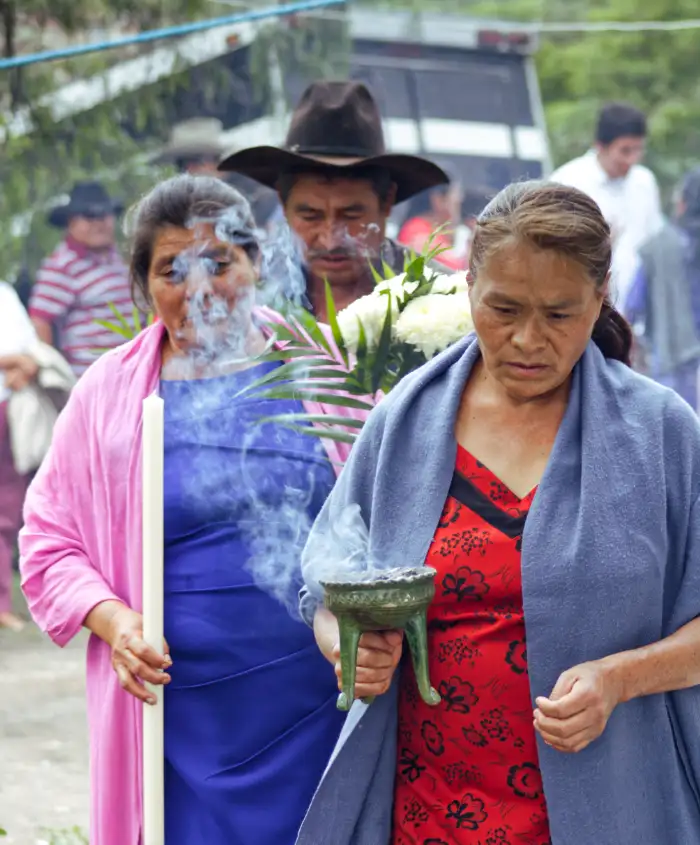
While the axe and machete sound as they slice each agave core, smoke begins to rise from the back of the house where the kitchen is located, smoke that flavors the water in the bracero, which is heated with the fire of the dried agave stalks, heat that embraces a pot with well water, plenty of cinnamon and the coffee that aunt Paula previously ground, is an indisputable form of commitment within the community, in which they support each other.
The freshness of the morning can be felt, but with the sound of the conversation between the palenqueros and magueyeros that are arriving, it evaporates. They've finished with the stone arrangement, the agave pineapples and it begins to be seen that everyone is already hungry, but they know that the commitment is to cover the oven before sitting down, it does not take so long for Tío Hermógenes to take out a bottle of Bicuish which he shares for those who begin to shovel the earth between the dust and the heat of the oven, the smile that they give for concluding this great work is noticeable. In other mezcal worlds, making numbers is the best way to pay wages, but in real terms in Logoche everyone knows that this day was not lost because they'll go to the field to work with a good breakfast, with mezcal in hand and happy to have contributed, this is how these communal practices are replicated, which make traditional mezcal unique.
The families that have defended it, are the families that have produced it, and even better are the families that have decided to keep it today knowing what it implies, that is how they resist it to be an industry, not so much because it is unhygienic, or because they do not think of large daily quantities, simply because they know that sharing bread goes hand in hand with sharing a drink and sharing work.
Families are an essential part of the future. There is a future to conserve the maguey landscapes where the flora and fauna give life to this environment. There is a future to innovate and use less firewood, to recycle the water that sometimes we no longer have, there is a future because the peasant conscience always abounds in the sense of life. The future of mezcal, its present and its past are the families that work on it.
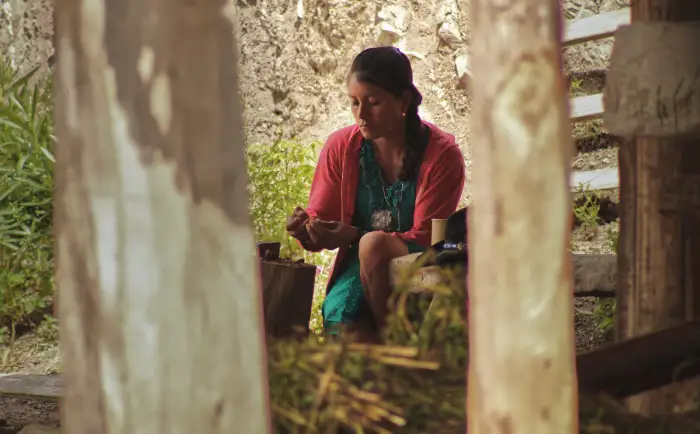
Join us to share with the families that make mezcal. The ones in charge of this tradition in the visits we organize to get to know more about this drink and the knowledge behind it. You can also come to our home in the city of Oaxaca to learn more about mezcal through a Mezcal Tasting.